
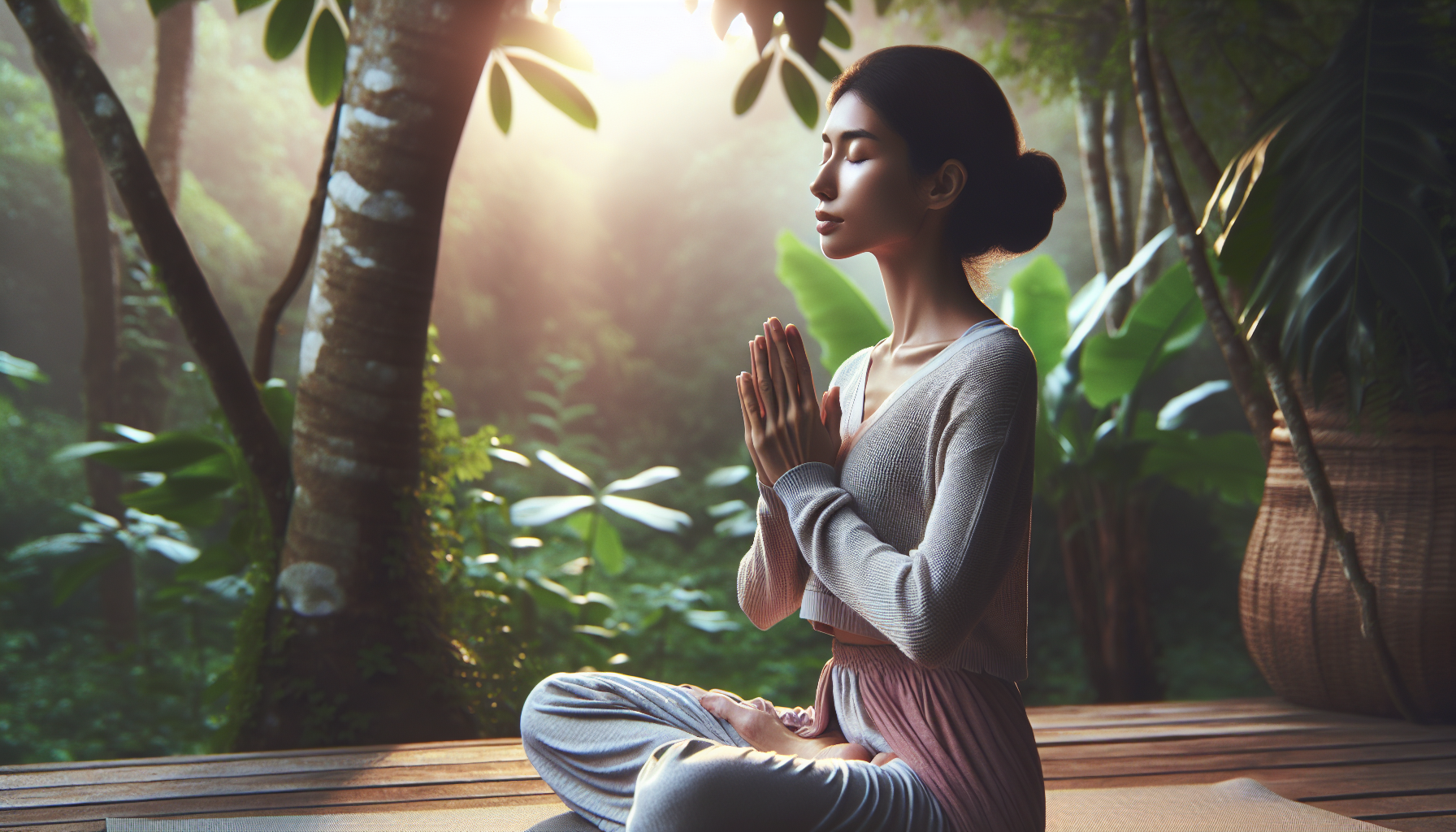
Breathing is the essence of yoga, as it connects the mind, body, and spirit. Here are three transformative breath exercises, or pranayama, that you can incorporate into your daily routine to enhance your well-being.
1. Anulom Vilom (Alternate Nostril Breathing)
Steps:
- Sit comfortably with your spine erect.
- Place your left hand on your knee, palm open to the sky.
- With your right hand, use your thumb to close your right nostril.
- Inhale deeply through your left nostril.
- Close the left nostril with your fingers and exhale through the right nostril.
- Inhale through the right nostril, close it, and exhale through the left.
- Continue this pattern for 5 to 10 minutes.
Benefits:
- Enhances lung function and respiratory endurance.
- Balances the left and right hemispheres of the brain.
- Reduces stress and promotes mental clarity.
Precautions:
- Avoid if you have a cold or nasal blockage.
- Pregnant women should practice gently.
2. Kapalbhati (Skull Shining Breath)
Steps:
- Sit in a comfortable position with a straight spine.
- Take a deep breath in.
- As you exhale, pull your stomach in towards your spine, forcefully expelling the air.
- Let the inhalation happen passively.
- Repeat the cycle for 1 minute and gradually increase the duration.
Benefits:
- Stimulates digestive organs and improves digestion.
- Energizes the nervous system and rejuvenates brain cells.
- Clears the frontal sinuses and can aid in preventing respiratory ailments.
Precautions:
- Not recommended for people with hypertension, heart disease, or hernia.
- Women should avoid during menstruation and pregnancy.
3. Bhramari (Bee Breath)
Steps:
- Sit straight and close your eyes, relaxing your face.
- Place your index fingers on your ears, gently closing the ear flaps.
- Inhale deeply, and as you exhale, make a loud humming sound like a bee.
- Feel the vibration in your head.
- Repeat this process for 5 minutes.
Benefits:
- Calms the mind and relieves stress and anxiety.
- Improves concentration and memory.
- Helps alleviate migraines and headaches.
Precautions:
- Should be done on an empty stomach.
- Avoid if you have an ear infection.
Conclusion
Incorporating these breathing exercises into your daily life can lead to profound changes in your mental, physical, and emotional health. Remember, the key to pranayama is consistency and mindfulness. So, take a deep breath, and let the journey to inner peace begin!
We hope you found this post helpful and we’d love to hear from you! If you have any comments, suggestions, or feedback, please feel free to share them below. Your input is invaluable to us and helps us improve our content. Also, if there’s a new topic you’re interested in or you’d like us to explore further, don’t hesitate to let us know. And if you enjoyed this article, please like, share, and subscribe for more updates. Your support means the world to us!


Let's hear it!