
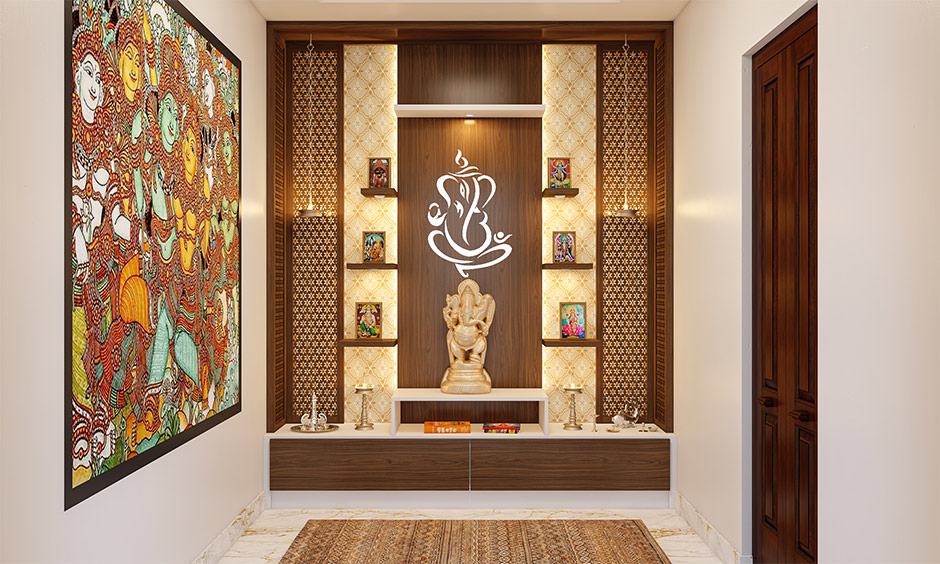
In Vastushastra, the placement of the devara (home temple) is crucial for harnessing positive energies and ensuring the well-being of the household. Before placing the devara, it is essential to take a bath, wear clean clothes, and maintain a positive mindset.
Ideal Directions for Placing a Mandir in the Home
The Northeast (Ishan Kona), ruled by Jupiter, is considered highly auspicious for placing the temple. The Centre of the House (Brahmasthan) is associated with prosperity and good health. The East, ruled by the Sun and Lord Indra, brings prosperity and wealth, while the North, ruled by Kuber, attracts wealth.
Direction for God Idols in the Pooja Room
Idols should face west so that you face east while worshipping. Specific deities have particular placements: Lord Ganesha should be placed on the left side of Goddess Lakshmi, and Goddess Saraswati on the right side. The Shivling should be placed in the northern part of the home (only small-sized). Lord Hanuman and Bhairav should face south, while Ganesh, Durga, and Kuber should also face south. Lord Kartikeya and Durga can face east, and Surya, Brahma, Vishnu, and Mahesh should face west.
Idols to Avoid in the Home Temple
Certain idols should be avoided in the home temple. Natraj (Rudra form of Lord Shiva) can lead to unrest, and two Shivlings should not be kept together. Shani Dev should be worshipped outside the home, and Rahu-Ketu are considered inauspicious. Statues or images of ancestors, war, and death should be avoided, and broken idols or damaged pictures should not be kept.
Direction to Face While Worshipping
Facing east while worshipping brings good fortune and wealth, while facing west attracts wealth. Facing north attracts opportunities and positivity, but facing south should be avoided as it is not considered auspicious.
Additional Tips
Use a magnetic compass to verify directions and place the temple on the ground floor if you have a duplex house. Maintain holy thoughts and pray for the happiness and guidance of all.
Conclusion
Following Vastushastra principles for placing the devara ensures that the home is filled with positive energy and blessings. By adhering to these guidelines, one can create a harmonious and prosperous living environment.
We hope you found this post helpful and we’d love to hear from you! If you have any comments, suggestions, or feedback, please feel free to share them below. Your input is invaluable to us and helps us improve our content. Also, if there’s a new topic you’re interested in or you’d like us to explore further, don’t hesitate to let us know. And if you enjoyed this article, please like, share, and subscribe for more updates. Your support means the world to us!
While Vaastu Shastra is technically referring to the science of architecture, its current practice often strays into pseudoscience and superstition. Articles on this platform serve as a lens into Hindu culture and living, but they don’t validate unscientific methods. Approach them with critical discernment.






Let's hear it!